Think you know Cyprus? Look beyond the beaches.
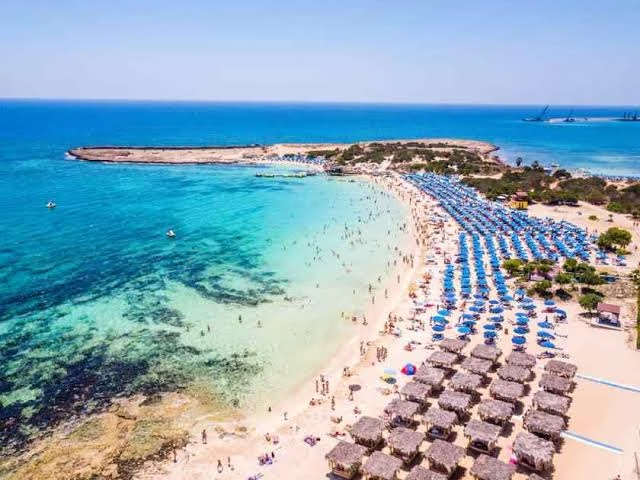
Cyprus is often associated with sunny beaches, turquoise waters and lively seaside resorts. But there is another side of the island that is just as fascinating.
Away from the coast, you can find forgotten villages, forests, waterfalls, unusual churches, old bridges and landscapes that tell stories from centuries ago.
Some of these places are easy to visit by car, while others are best experienced as part of a day trip or organised excursion.
If you are looking for unusual places to visit in Cyprus, here are nine that might make you see the island in a completely different way.
1. Mitsero Red Lake – A Landscape You Wouldn’t Expect in Cyprus
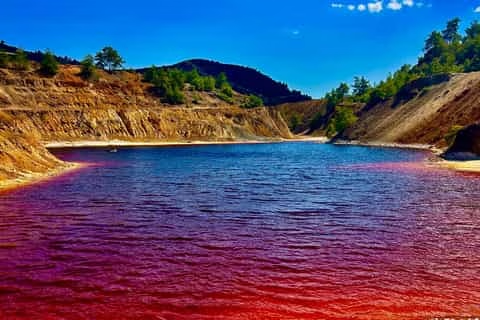
One of the most unusual landscapes in Cyprus can be found near the village of Mitsero.
Known as Red Lake, or Kokkinopezoula, the site is connected to the island’s mining history. Its striking colour and surrounding landscape make it look almost otherworldly, and very different from the Cyprus most visitors imagine.
The area is part of the wider historic mining landscape around Mitsero, where copper and other minerals were extracted for generations. Today, nature is slowly reclaiming parts of the area, creating an unusual contrast between the old industrial landscape and the surrounding countryside. The site is also used as a landmark on the annual Mitsero Mine Run.
Why visit?
Because it is one of those places where you stop and think, “Is this really Cyprus?”
How to explore it:
Mitsero is best visited by car or as part of an organised excursion exploring the villages and countryside of the Nicosia district.
2. Fikardou Village – A Place Where Time Stands Still
Hidden in the mountains of the Pitsilia region, Fikardou feels a world away from the busy coastal resorts.
The almost deserted village sits at around 900 metres above sea level and is known for its beautifully preserved traditional houses. Many of the buildings date from the 18th century and feature wooden details and traditional rural architecture.
Fikardou was declared an Ancient Monument in 1978 and received a Europa Nostra award in 1987 for its restoration and preservation. Two of its historic houses have been turned into museums, offering a glimpse into traditional Cypriot village life.
The village is small enough to explore on foot, with quiet stone paths and very little of the bustle you might expect from a popular tourist attraction.
Why visit?
For a glimpse of traditional Cyprus before modern tourism changed the island.
Good to know:
Fikardou can be combined with a visit to Machairas Monastery, which is less than 15 minutes away by car.
3. Kouris Dam & the Submerged Church
Imagine looking across a large reservoir and seeing the remains of a church rising from the water.
This is the unusual sight associated with Kouris Dam, near Limassol.
The church of Agios Nikolaos belonged to the old village of Alassa. When the Kouris Dam was constructed, the village was relocated to higher ground. The old church remained in the reservoir area, and its appearance changes depending on the water level.
When the water is high, much of the structure is hidden. When the water level falls, more of the old church and surrounding land become visible.
It is a fascinating reminder that the landscape around Cyprus’ reservoirs is not simply natural scenery — it can also hold stories of villages and communities that once stood there.
Why visit?
For the history, the scenery and the unusual sight of a church connected to a village that was relocated.
How to explore it:
The area works particularly well as part of a Limassol countryside road trip, where you can combine the reservoir with nearby villages and other attractions.
4. Agioi Saranta Cave Church – A Church Inside a Cave
This is one of those places that sounds unusual before you even see it.
The Agioi Saranta Cave Chapel near Protaras is built inside a large natural cave. A dome rises above the cave, while stalactites hang from the ceiling inside.
According to local tradition, the forty stalactites are associated with the Forty Martyrs of Sebaste, giving the chapel its name. The official Cyprus tourism map describes it as a unique cave chapel and lists it among the area’s places of interest.
The experience is very different from visiting a large church or monastery. The natural cave itself becomes part of the space.
Why visit?
Because it combines nature, faith and local tradition in a setting you are unlikely to find anywhere else on the island.
How to explore it:
It can be included in a day exploring Cape Greco and the Protaras area, or visited independently by car.
5. Millomeris & Caledonia – Yes, Cyprus Has Waterfalls
When people picture Cyprus, waterfalls are probably not the first thing that comes to mind.
But high in the Troodos Mountains, the landscape becomes surprisingly green, cool and forested.
Two of the best-known waterfalls are Millomeris and Caledonia, both around the Platres and Troodos area.
Millomeris is particularly accessible from Platres, while the Caledonia trail follows the Kryos Potamos river through dense forest. The current official hiking information lists the Millomeris route at around 1.2 km and the Caledonia trail at around 3 km.
The contrast is what makes the experience special: after spending time around Cyprus’ sunny coastline, you can suddenly find yourself walking through a cool mountain forest beside running water.
Why visit?
For a completely different side of Cyprus — green, peaceful and surprisingly cool.
How to explore it:
The waterfalls are ideal for a Troodos road trip and can also be combined with mountain villages, monasteries and other attractions in the area.
And this is only the beginning.
From forgotten medieval villages to hidden bridges deep in the Troodos forest, there is still much more of Cyprus to discover.
Continue exploring in Part 2 →